
Why this Scene from TRUE ROMANCE is so Brilliant
What starts as an offbeat anecdote about eggplants transforms into one of cinema's most gripping and unforgettable confrontations.

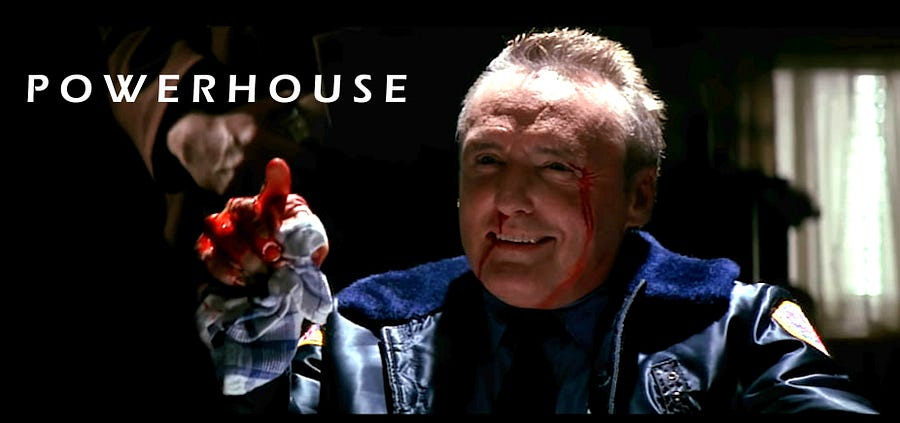
In True Romance, Quentin Tarantino’s writing and Tony Scott’s direction come together in a darkly comedic and tension-filled scene that’s both brutal and mesmerizing. At its core is the electrifying face-off between Christopher Walken’s ruthless mob enforcer, Vincenzo Coccotti, and Dennis Hopper’s stoic Clifford Worley.
This moment, often called the “Sicilian Scene,” is a masterstroke of filmmaking, blending sharp dialogue, nuanced performances, and deliberate visual choices to create a cinematic milestone. Let’s take a look at why this scene is one of cinema’s best, analyzing the performances, the cinematography and music.
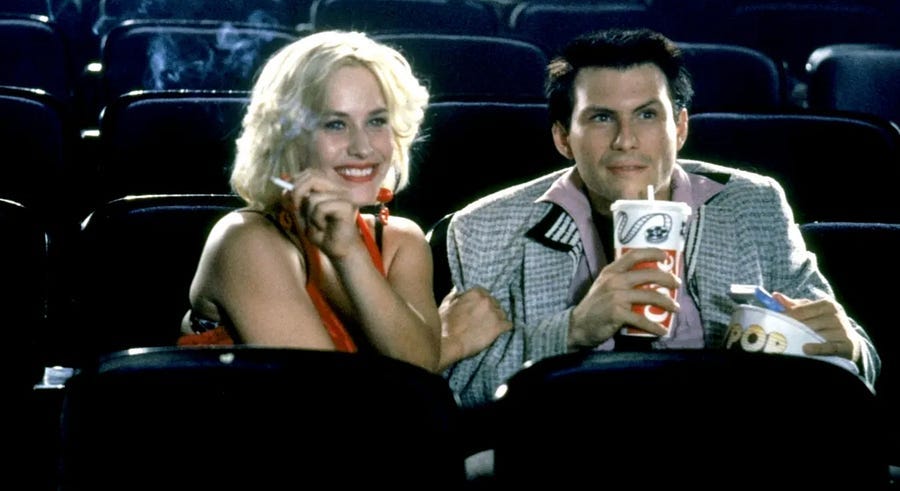
For those who need a refresher, here’s the setup: Clarence Worley has stolen a suitcase full of cocaine from Alabama’s abusive pimp, Drexel, and the couple is on the run, hoping to sell the drugs and start fresh in Los Angeles. But Drexel’s mob connections catch wind of the theft. This leads Vincenzo Coccotti, a cold and calculating mob enforcer, to pay a visit to Clarence’s father, Clifford, in search of answers. What follows is a chilling interrogation and a deadly test of wills..
The Performances
The scene begins with Clifford walking into his own home, only to be greeted with a strike to the face that immediately sets the tone. It’s not just a warning; it’s a declaration of the stakes. Clifford is outmatched, and the room feels claustrophobic with danger. From this moment on, we’re locked into his perspective, fully aware that his chances of survival are slim
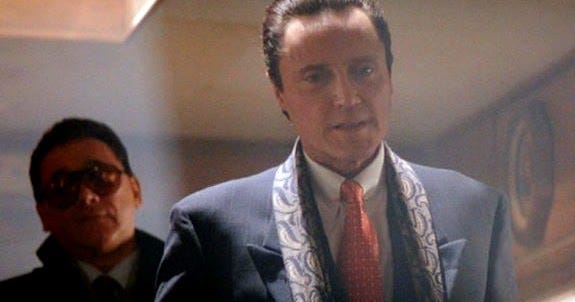
Christopher Walken’s portrayal of Coccotti is nothing short of chilling. He’s not a stereotypical, unhinged mobster; instead, he radiates a calm, almost gentlemanly menace. His lines are delivered with detached precision, as if he’s reading from a manual on intimidation. Even when he hits Clifford, he offers a handkerchief, a gesture that is somehow more unsettling than outright cruelty.
But then out of nowhere, Clifford begins a seemingly random conversation: “You’re Sicilian, huh?” What follows is the infamous “Sicilian story,” a biting monologue that’s as audacious as it is brilliant. Clifford weaves a provocative tale about Sicilian ancestry, delivering it with a sly grin and a hint of resignation. The story isloaded with racial tension, and delivered with deliberate precision. Hopper’s delivery is magnetic — he knows exactly what he’s doing, and so do we. This verbal grenade is not just his final act of defiance meant to hurt Coccotti’s pride. It’s also a way to prevent his inevitable torture by pushing Coccotti to kill him right away.
Coccotti’s reaction to the story is fascinating. At first, he laughs — a genuine, almost appreciative laugh that feels like an acknowledgment of Clifford’s nerve. But beneath the laughter is a storm brewing. Coccotti’s pride has been wounded, and his calm veneer cracks. When he finally pulls the trigger, it’s not just business — it’s personal. His line, “I haven’t killed anybody since 1984,” lands like a chilling punctuation mark, revealing that Clifford’s words cut deeper than any physical resistance could.
The power dynamics in this scene are subtle but powerfully illustrated, even in small details like in Clifford’s decision to ask for a cigarette. At first, he declines the offer, but as the scene unfolds, he changes his mind. This simple act is layered with meaning — it’s his quiet acknowledgment of his fate. He knows he won’t give up his son, even if it costs him his life. By the end, it’s Clifford who holds the cigarette. Though Clifford loses his life, he denies Coccotti the information he seeks and exits on his own terms.
Cinematography
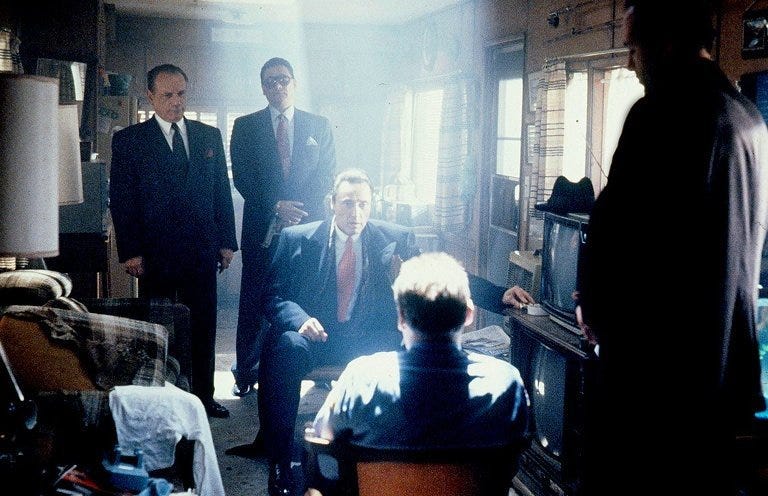
The camera work in this scene is equally masterful. The tight, almost suffocating close-ups pull us into the characters’ emotions. Every flicker of Clifford’s defiance and every cold calculation behind Coccotti’s eyes are laid bare. This framing heightens the tension, making it impossible to look away from their escalating power struggle.
The scene also unfolds in a dimly lit room, with both Coccotti and Clifford shrouded in shadows. Even though Clifford sits directly under a skylight, the shadows obscure his face, symbolizing the uncertainty and danger he’s engulfed in. The interplay of light and dark underscores the psychological battle at play — both men are concealing something: Coccotti’s deadly intentions and Clifford’s quiet resistance. The atmosphere is suffocating, amplifying the dread.
Music
One of the most striking elements of this scene is the use of music. As Clifford lights his cigarette and prepares to deliver his monologue, the serene strains of the “Flower Duet” from Lakmé begin to play. The music is hauntingly beautiful, a stark contrast to the brutal reality of the moment. This juxtaposition creates a dreamlike dissonance, elevating the scene into something poetic, even as it hurtles toward tragedy.
The “Sicilian Scene” is unforgettable because it embodies everything True Romance is about: love, loyalty, and the lengths we go to for those we care about. This isn’t just a scene — it’s a symphony of tension, defiance, and humanity. Truly powerhouse.
#filmmaking #filmmaker #filmschool #moviescene #movietrailers #quentintarantino #christopherwalken